How to Stay Motivated on Long-Term Personal Projects
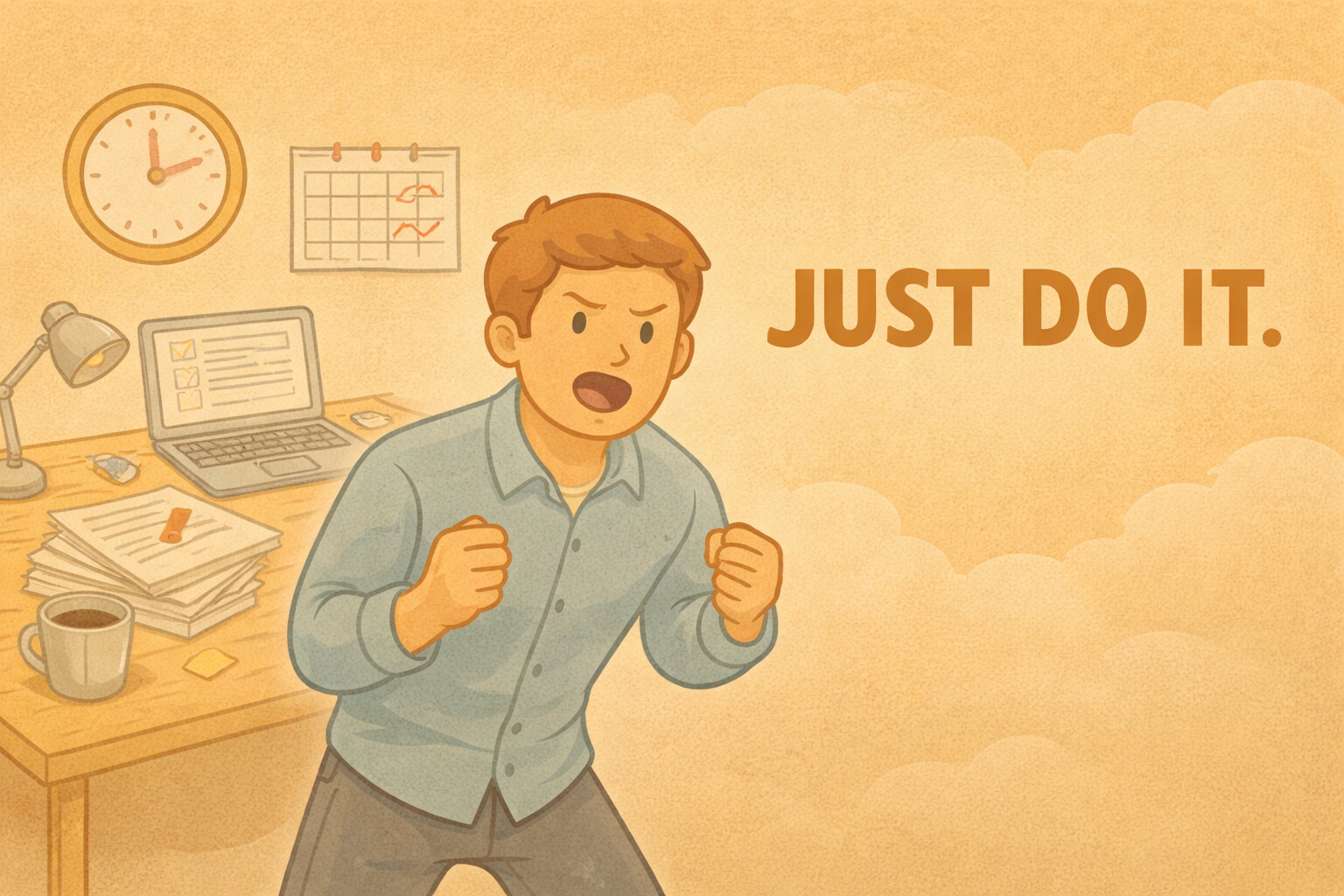
You start your project full of fire, ideas flowing, energy high and visions of the final product clear in your head. Then weeks go by, and that excitement fades and instead is replaced with fatigue, the tasks that were once exciting now feel like a chore. We've all been there, and so the question pops up, how are people finishing their big projects? are they simply built different? If you were to ask any of them about how can you stay motivated so you can finish off your project, they will probably send you this meme:

So... what's their secret?
It's not motivation. It’s self-discipline. Motivation is that little spark that gets you started. Discipline is what keeps you showing up when that spark dies out.
And believe me, I struggle with it a LOT, sometimes it feels like you'd rather do anything but work on your project, that kind of struggle. But over time, I picked up a few tricks that help me stay disciplined and sprinkle in small bursts of motivation along the way.
The motivation-discipline relationship:
Think of motivation as kindling and discipline as the log. Kindling gets the fire started quickly and burns bright, but it won't last the night. The log burns steady and keeps you warm until morning. Whenever sparks of motivation appear, they help your discipline especially on weak days.
What kills motivation on long-term projects?
Before we talk about solutions, let's understand the problems. Long-term projects drain motivation in specific, predictable ways.
- The excitement gap Starting is thrilling. The middle is tedious. Most projects die in the boring middle section where the novelty has worn off.
- Progress invisibility When you're building something complex over months, daily progress feels tiny. You worked all afternoon and the product looks almost identical to yesterday. That's demoralizing.
- Scope creep Your initial "simple" idea keeps growing. Each new feature seems essential. Suddenly your three-month project is a year-long commitment, and the overwhelm sets in.
- Lack of accountability Nobody's watching. Nobody's waiting. Missing a self-imposed deadline has zero real consequences, so it's easy to justify skipping today.
Things you can do to make self-discipline feel easier.
Keep a thorough to-do list with small tasks
The moment you lack specific tasks to do, you'll start procrastinating and just planning. Your to-do list should be detailed enough that you never have to think "what should I work on now?"
More importantly, keep your tasks small. "Build the authentication system" is a mountain that you don't want to see as your next to do when you don't feel like working. Break it down until it feels stupidly small.
Follow the "no 0% days" rule
Get something done each day, no matter how small. Obviously, still take one or two rest days each week to avoid burning out. But on work days, always move the needle, even slightly.
Some days you don't feel like working, so you do a very small task and call it a day. Other days you're extra motivated, so you tackle a big task or multiple tasks. And sometimes, you start with a small task on a low energy day, but once you get going, you find motivation and keep working.
The hardest part is starting. Once you're already working, continuing is easier. A five-minute task can get the engine running and turn into a productive hour simply because you broke through the initial resistance.
Build tiny versions and show them off
Having a working, demo-able version, even if it's tiny, is incredibly motivating. It proves the project is real. It shows progress. And it gives you something concrete to build upon.
Don't wait until everything is perfect to create your first working version. Build the smallest possible thing that works, then expand from there. Each small version you complete motivates you to start the next chapter. This cycle of building, completing, and starting fresh keeps the project feeling new.
Go public
Share your work in progress. Post updates on social media. Tell your friends what you're building. You don't need to launch a full marketing campaign, even just texting progress to a friend creates accountability.
Going public makes it harder to ghost your own project. It's also a great way to get feedback, expand your network, and sometimes find collaborators or users.
Pick projects you actually care about
If you have a choice in what to build, pick something you need or genuinely care about. Projects driven by trends or purely profit motives are harder to sustain when the going gets tough.
When you're solving your own problem or building something you'd use yourself, you have built-in motivation beyond finishing. You want the solution to exist, not just to say you completed something.
Keep a mini progress journal
Write a few notes after each session. Nothing fancy, just what you did, learned, or thought about. On days when you feel like you've made no progress, scroll back through your journal. You'll be reminded of how far you've actually come.
You can use something like MindMirror to keep those notes, it’s perfect for quick entries and searchable later when you forget where you left them to see your journey.
Don’t daydream too much about success
Here’s a weird one backed by psychology: when you constantly imagine how successful you’ll be once it’s done, your brain releases dopamine as if you already achieved it. Further on the topic in the article Mental Simulation as Substitute for ExperienceSo you end up feeling the satisfaction of finishing... without finishing.
Finished projects don't come from staying motivated. They come from showing up on unmotivated days and doing the work anyway.
I hope these tips give you that little nudge to revive one of your half-finished projects and see it through this time.
Need a simple way to track your long-term project progress? Try MindMirror free for 7 days. Quickly capture daily wins, store research notes, and find everything instantly with powerful search. No complex organization needed, just write naturally and let search handle the rest. Perfect for keeping project journals that actually help you stay motivated.
Share this post