Decide Once: How Fewer Decisions Make You More Productive
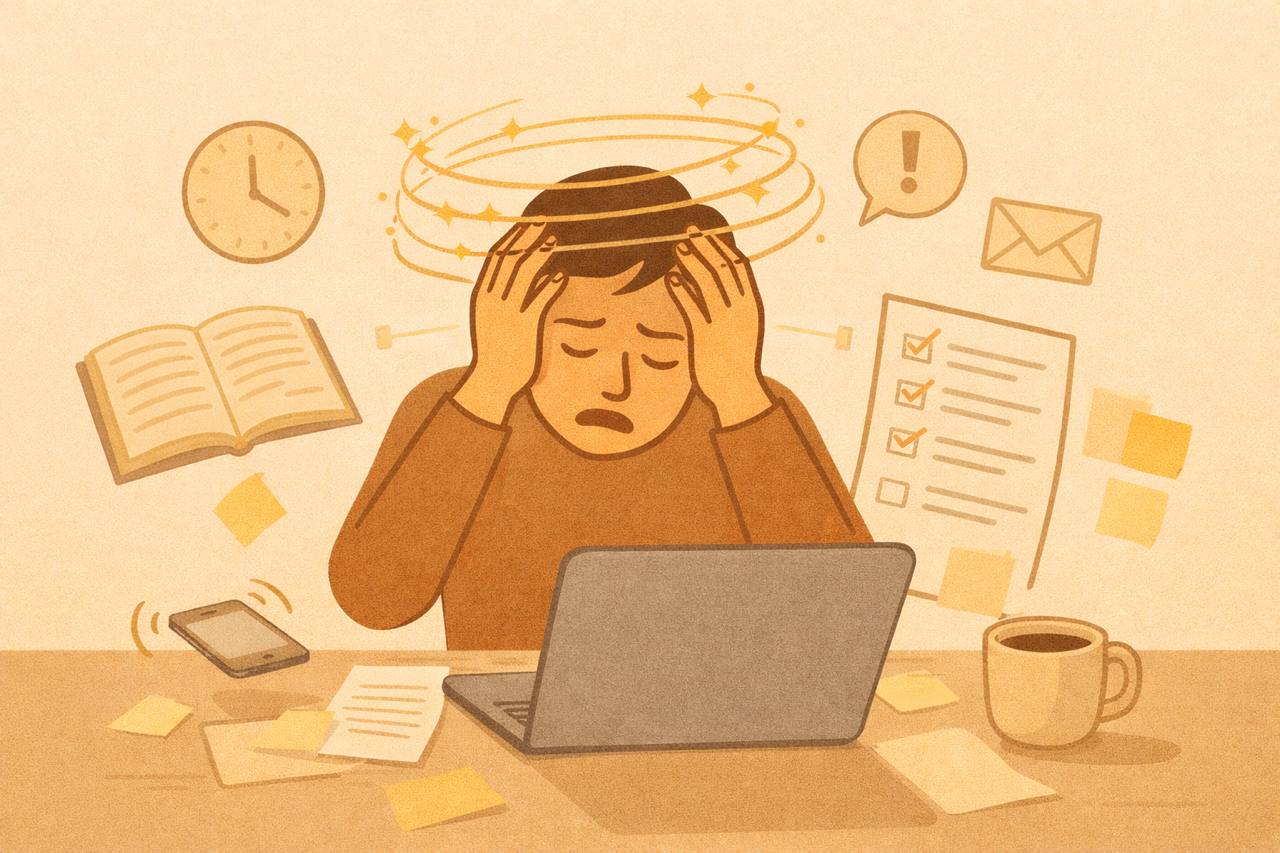
Ever sit down to work, open your project, and somehow an hour later you've done nothing but pick a font? Or rename folders? Or rewrite the same email opening three times? You weren't lazy. You were busy making decisions. The problem is that none of them moved the work forward.
Most of us try to fix this with more discipline: push harder, focus better, stop getting distracted. But the real fix is usually simpler. Make fewer decisions.
Small decisions add up
You've probably heard of "decision fatigue", the idea that every choice you make burns a little bit of mental energy. To be fair, the science behind it is debated, and researchers still argue about whether willpower really runs out like a battery. But you don't need a study to know the feeling. After an afternoon of small choices, the big important one gets the worst version of you.
The bigger cost is that decisions make you switch context. Every time you stop to ask "how should this look?" or "where should this go?", you jump out of doing the work and into thinking about it. We covered how expensive that switching is in the multitasking trap, and it's the same here, just hidden inside a single task.
The core idea:
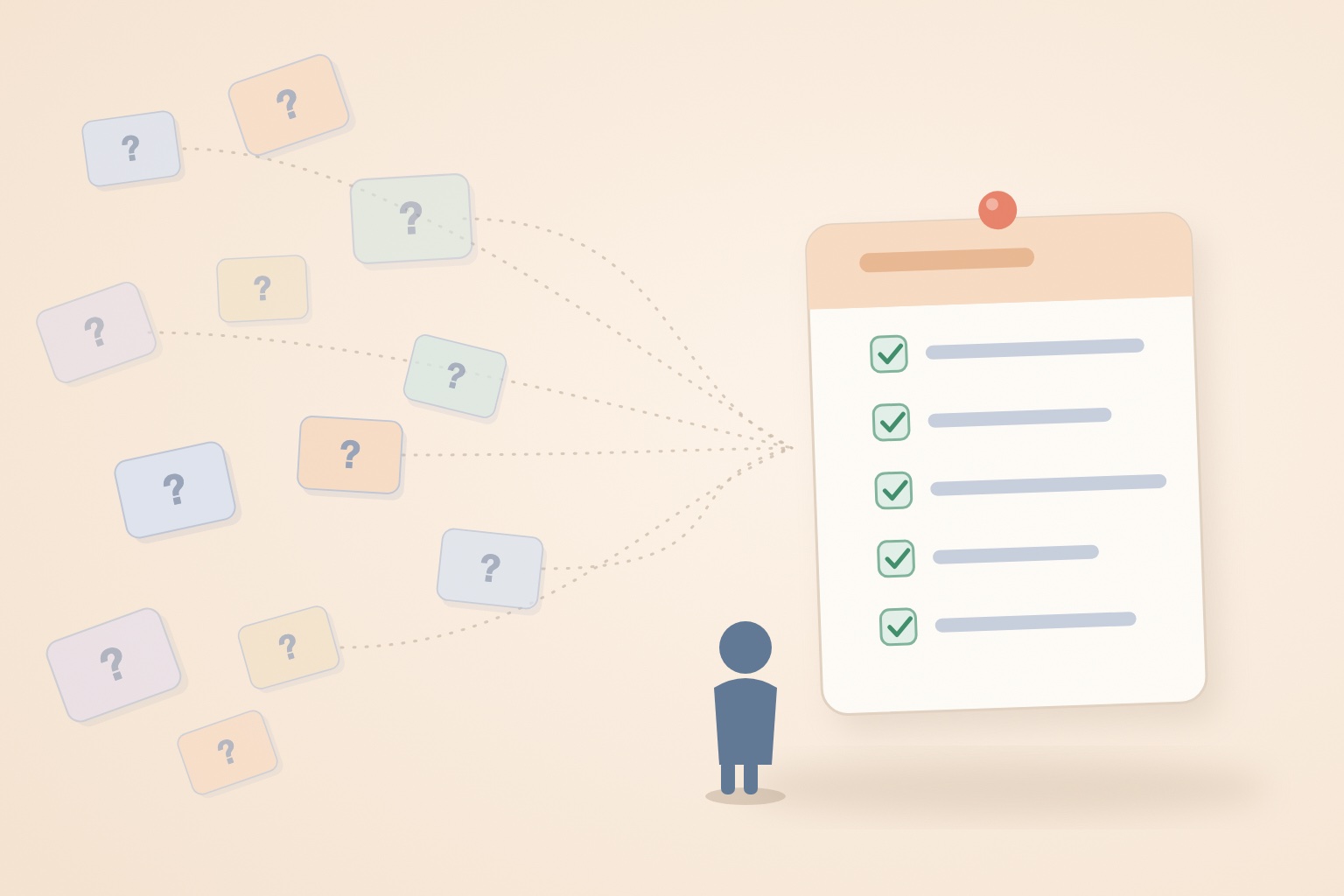
A decision you make once and write down is a tool. A decision you make again every time is a tax. The goal is to turn as many taxes into tools as you can, so your energy goes into the work that actually needs it.
Where the repeat decisions hide
The tricky part is that these decisions are so small you don't notice them. A few common ones:
- Starting the day What should I work on first? If you answer this fresh every morning, you'll often pick whatever feels easiest, not what matters most.
- Formatting and naming How to name a file, how to structure meeting notes, what a report should look like. Tiny choices, made dozens of times a week.
- Messages and email When to check them, how to reply to the usual questions, what to do with the ones that need more thought.
- Look and feel Colors, fonts, layouts, styles. Anyone who has spent an evening comparing two nearly identical shades of green knows how much time this can eat.
How to "decide once"
1. Spot the decisions you keep re-making
For one week, notice every time you pause to decide something you've already decided before. Write each one down. By the end of the week you'll have a list of repeat offenders, and it'll probably be longer than you expected.
2. Turn them into defaults
Pick an answer that's good enough and make it the default. Not the perfect answer, the good enough one. "Meeting notes always start with date, attendees, decisions." "I check messages at 11 and 4." "The first hour of the day goes to the hardest task." A default you follow beats a perfect choice you have to think about every time.
3. Write your rules down
A decision that only lives in your head isn't really made. You'll second-guess it next week. Write it somewhere you'll actually see it. This is also a gift to your future self, who won't remember why you chose what you chose.
I keep mine as quick notes in MindMirror, a few lines per decision with the reason behind it. No folders to sort them into, I just search "naming" or "weekly review" when I need them.
4. Let tools hold the rules for you
The best place for a decision is inside the tool you're already using, so you can't forget it even if you try. Email filters, document templates, code formatters, and recurring calendar blocks all work this way. You decide once, and the tool applies it every time.
5. Review your rules, not your every move
Defaults aren't forever. Once a month, look at your rules and ask if any of them are getting in the way. Change the rule if you need to, then go back to following it. That way you're making one thoughtful decision a month instead of a hundred rushed ones a day.
But won't this make my work boring?
This is the worry I hear most, and I had it too. The answer is no, because you're only locking in the decisions that don't matter much. That frees you to spend real creative energy on the stuff that does: the idea, the argument in your essay, the design of the feature.
Creative fields have known this for a long time. Chefs set up their station the same way every day so they can focus on the cooking. Game studios agree on a style guide (a limited color palette, one light direction, one outline thickness) before drawing a single asset, so nobody debates what a barrel should look like on their 200th barrel. Pixel artists working with only 16 colors often do their best work, because the limit pushes them to solve the problem instead of hiding behind endless options.
Creativity isn't about having infinite options. It's about spending your attention on the choices that actually matter.
So pick one thing you keep re-deciding this week, make a rule for it, and write it down. It'll feel too small to matter. Do it a few more times and you'll be surprised how much lighter your work days feel.
P.S. If you're making a 2D game, we applied this exact idea to game art with Spritory: pick your style once and every asset you make follows it.
Share this post